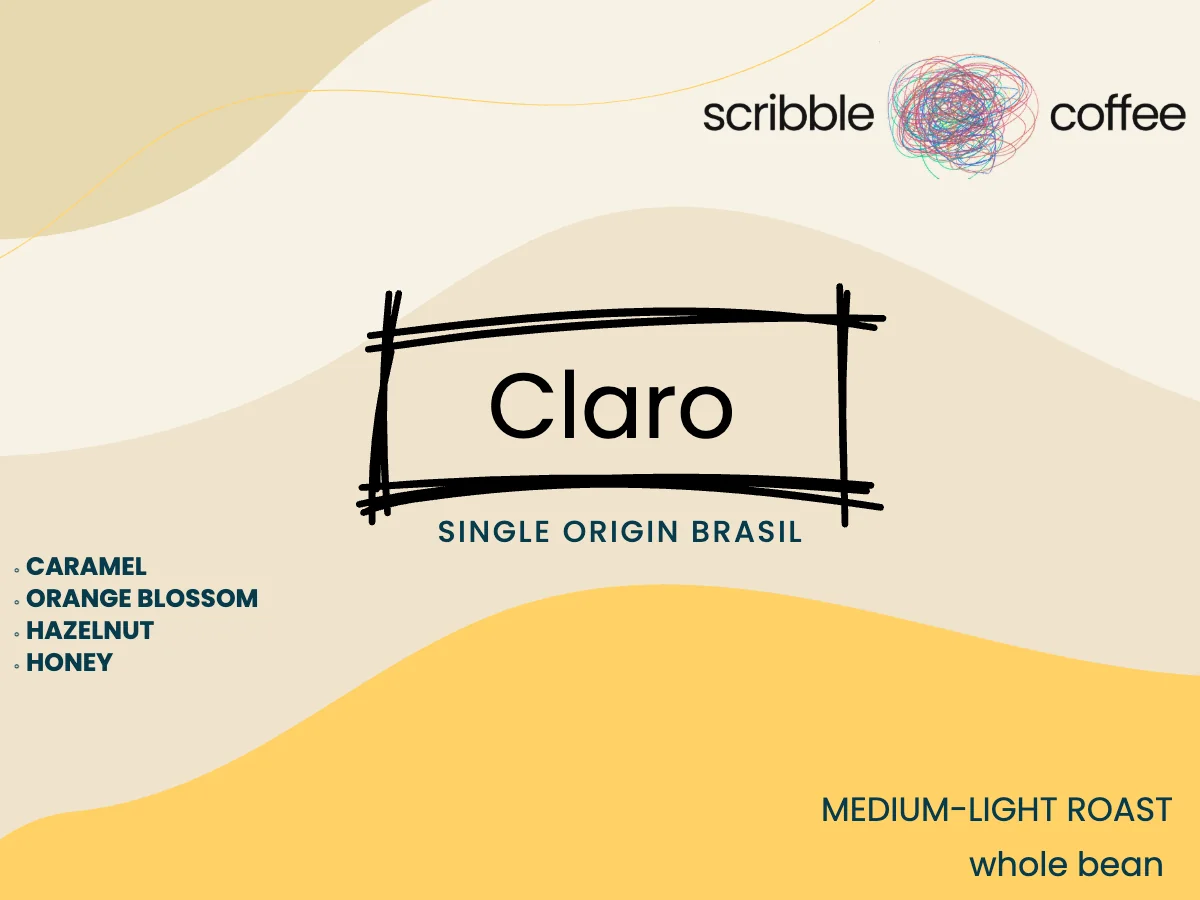
claro
medium-light roast · natural · mundo novo, yellow catuaí, topázio, acaiá · 950–1,120 masl · minas gerais, brasil
what do these mean?
- medium-light roast
- roasted on the lighter side, keeping more of the bean's own sweetness and fruit than the toasty flavour roasting adds.
- natural
- the cherry was dried whole in the sun, fruit still on, before the bean was taken out. It's why these taste sweet and heavy rather than sharp.
- the variety names
- the kinds of coffee plant this lot grew from. A bit like grape varieties in wine — each one brings its own character.
- masl
- meters above sea level. It's cooler higher up, so the cherries ripen slowly and the beans end up denser and sweeter.
caramel · orange blossom · hazelnut · honey
where do these come from?
- nothing is added
- there's no flavouring in the bag — just coffee. these are the things we taste in the cup, written down to give you somewhere to start.
- they're a guide, not a promise
- tasting is subjective, and your water, grinder and brew method all change the result. if you taste something we didn't, you aren't wrong.
$20 · 250 g (8.8 oz) whole bean
subscriptions are coming soon — let us know if you want one.
wondering when to open it? see when to open your bag.