Our escuro says caramel · brown sugar · cinnamon · cooked blackberry · dark chocolate. There is no caramel in the bag, and no blackberry. Just coffee.
So what are those words doing there?
they’re descriptions, not ingredients
Roasted coffee contains hundreds of aromatic compounds, and a good few of them are the same compounds you meet in other foods. When a coffee genuinely smells of blackberry, it’s because some of the chemistry overlaps — not because anything was added. Nothing is added to our coffee at any point.
they come from tasting it
We brew the coffee, taste it, and write down what it reminds us of. That sounds informal because it is. Roasters usually taste in a fairly structured way — same grind, same water, same ratio, several cups side by side — which makes comparisons fairer, but the words at the end are still human judgement.
That’s why two roasters can sell the same coffee with different notes on the bag, and neither is lying.
so they’re partly arbitrary
Worth being honest about: the vocabulary is a convention. “Cooked blackberry” is more specific than “fruity” and less specific than a chemical name, and it landed in that middle register because it’s the most useful place for a person to start.
Your own reference points matter too. Someone who grew up eating a fruit will recognise it in a cup much faster than someone who hasn’t. Neither palate is better.
how to actually use them
Read them before you drink, then mostly forget them. They’re a hint about the general direction — sweet and chocolatey, or bright and fruity — rather than a checklist.
If you want to sharpen your own tasting, the most effective trick is comparison: brew two coffees side by side and the differences jump out in a way they never do on their own. That’s the whole reason we sell claro and escuro as a pair.
the flavor wheel
The Specialty Coffee Association and World Coffee Research publish the Coffee Taster’s Flavor Wheel, which is the reference most of the industry works from. It maps the vocabulary from broad categories at the center out to specific notes at the rim.
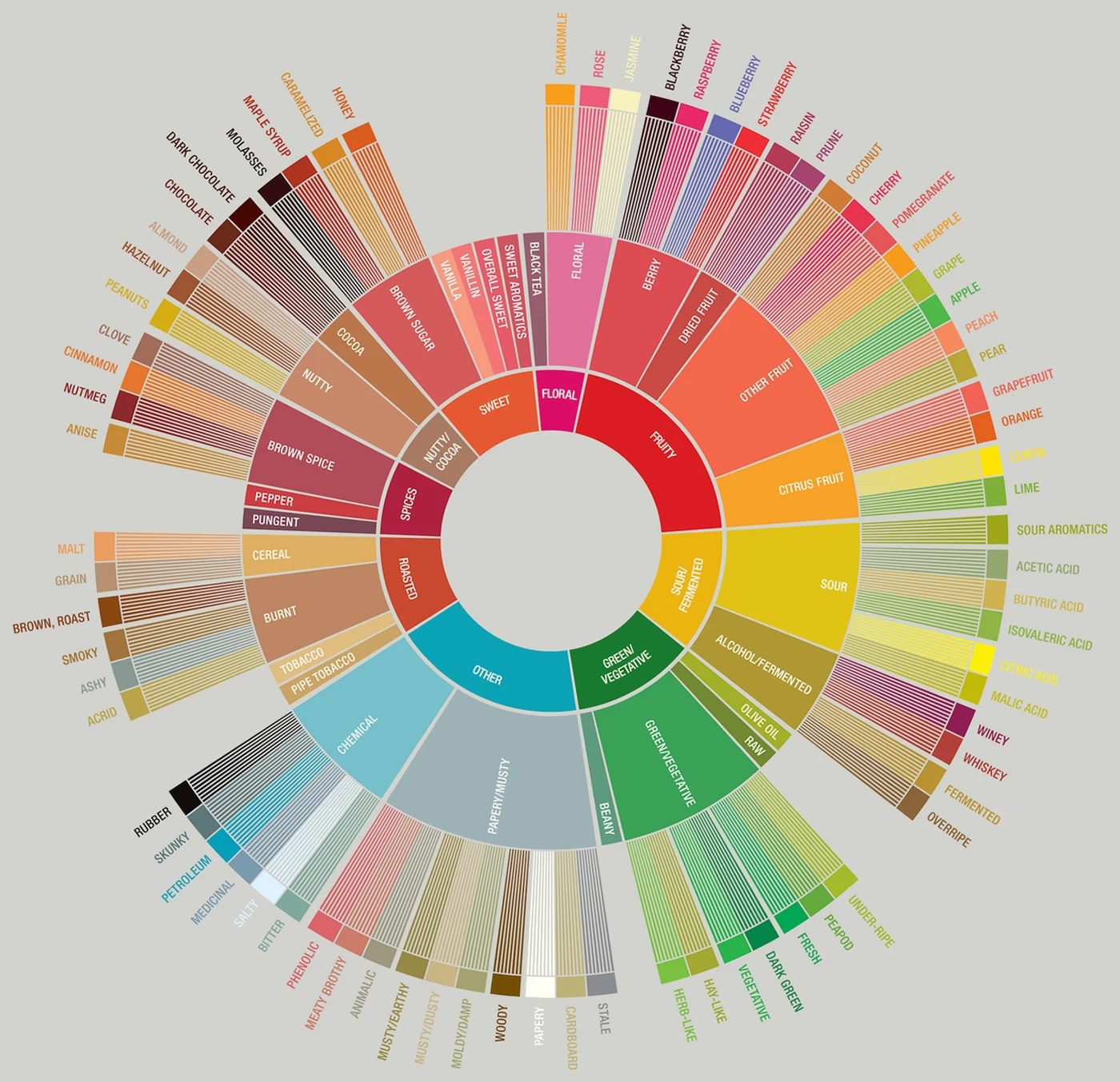
The way to read it is from the inside out: start with the broad wedge that feels right — fruity, nutty, sweet — and only then work outward to something more specific. Starting at the rim is how you end up staring at “blackcurrant” wondering if you’re imagining it.
The SCA has a good short guide to working through it: how to use the flavor wheel in eight steps. Posters are available from the SCA store.